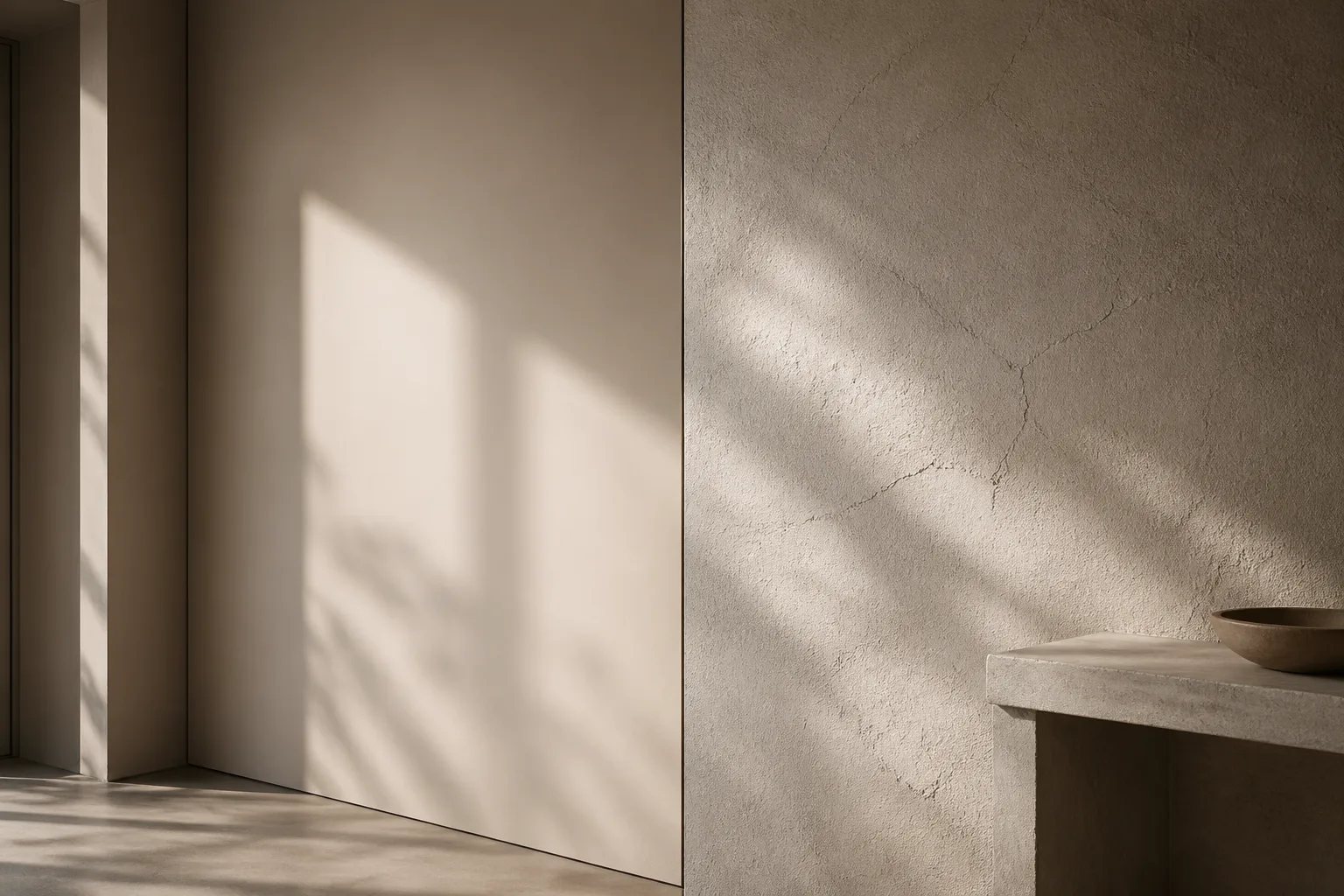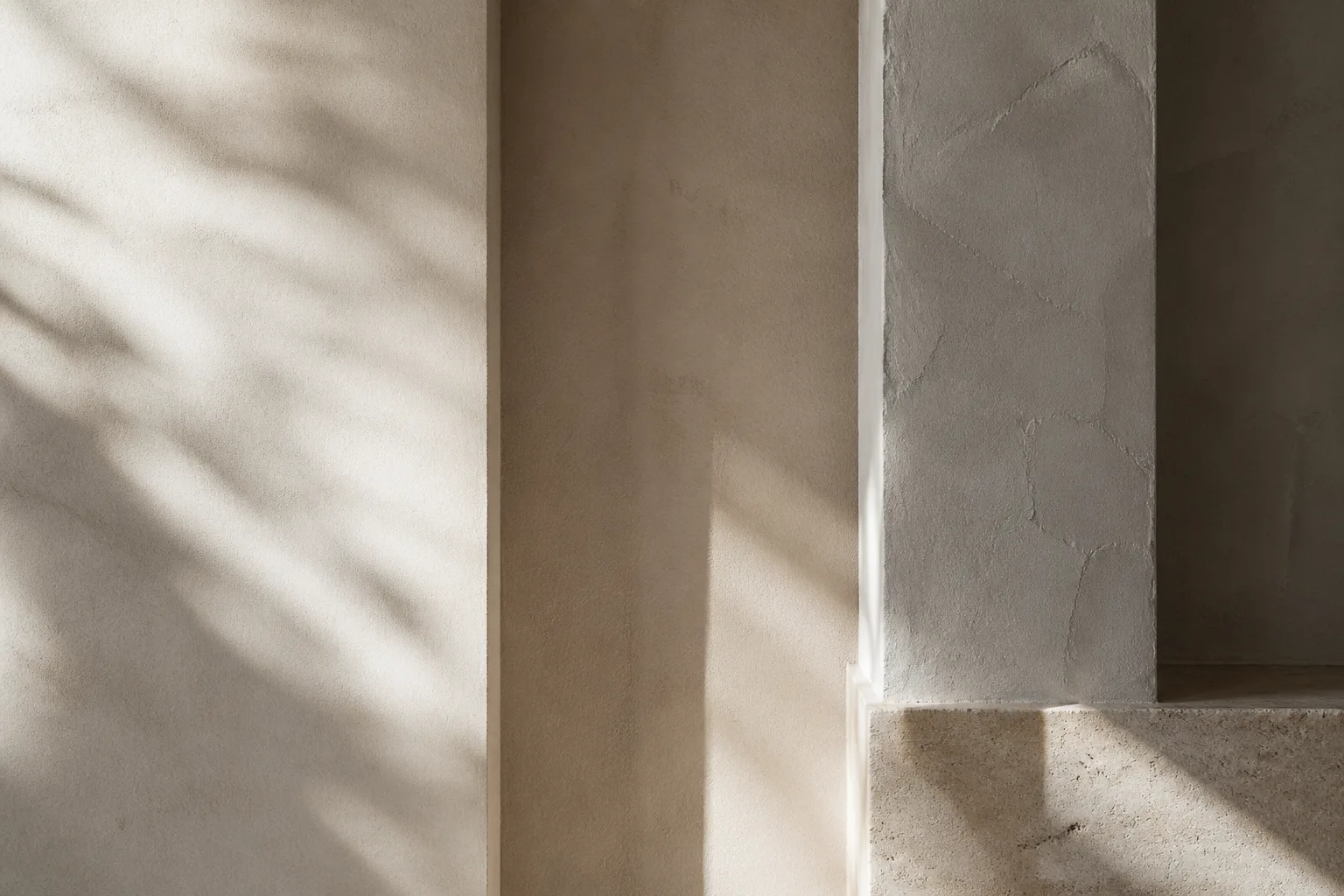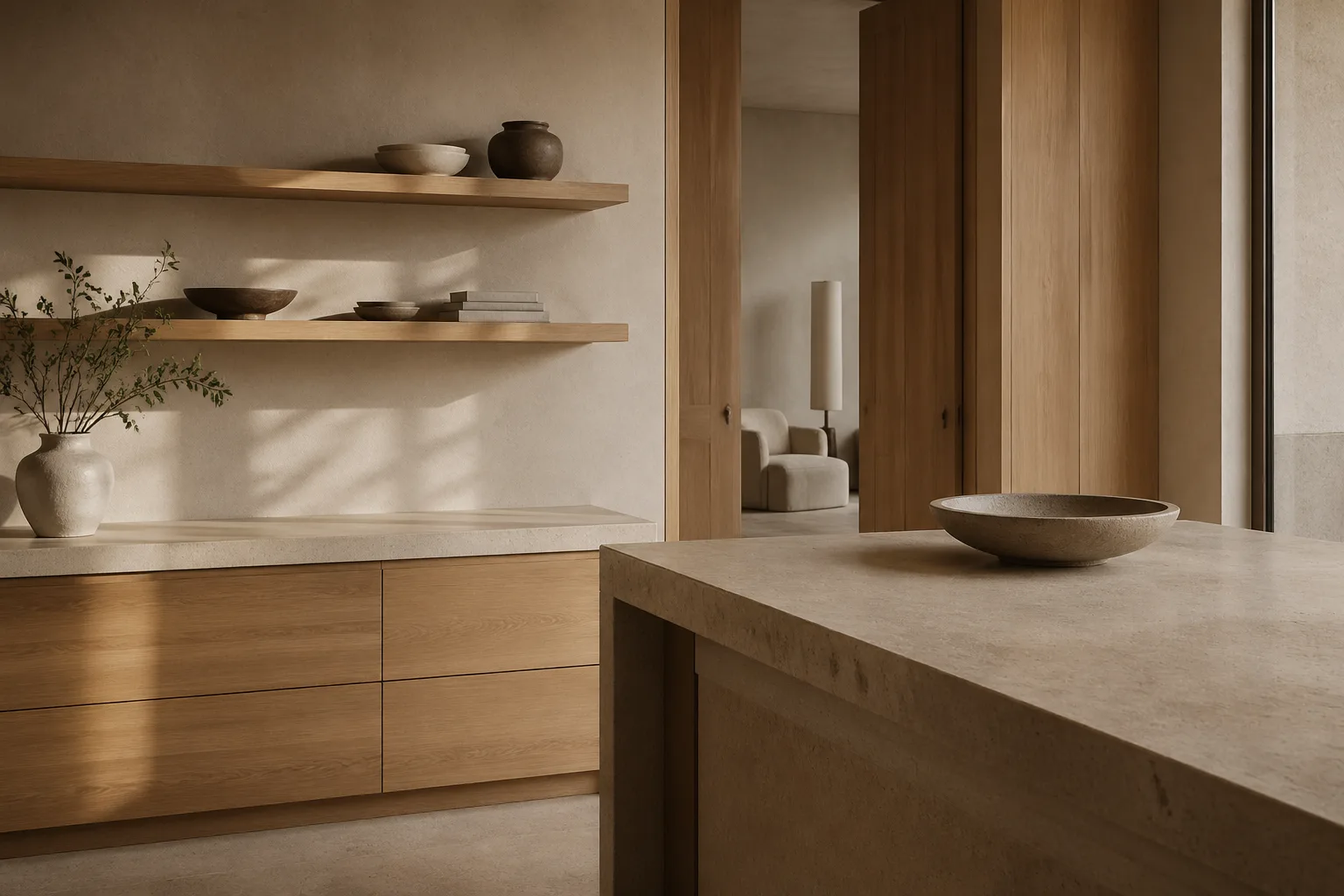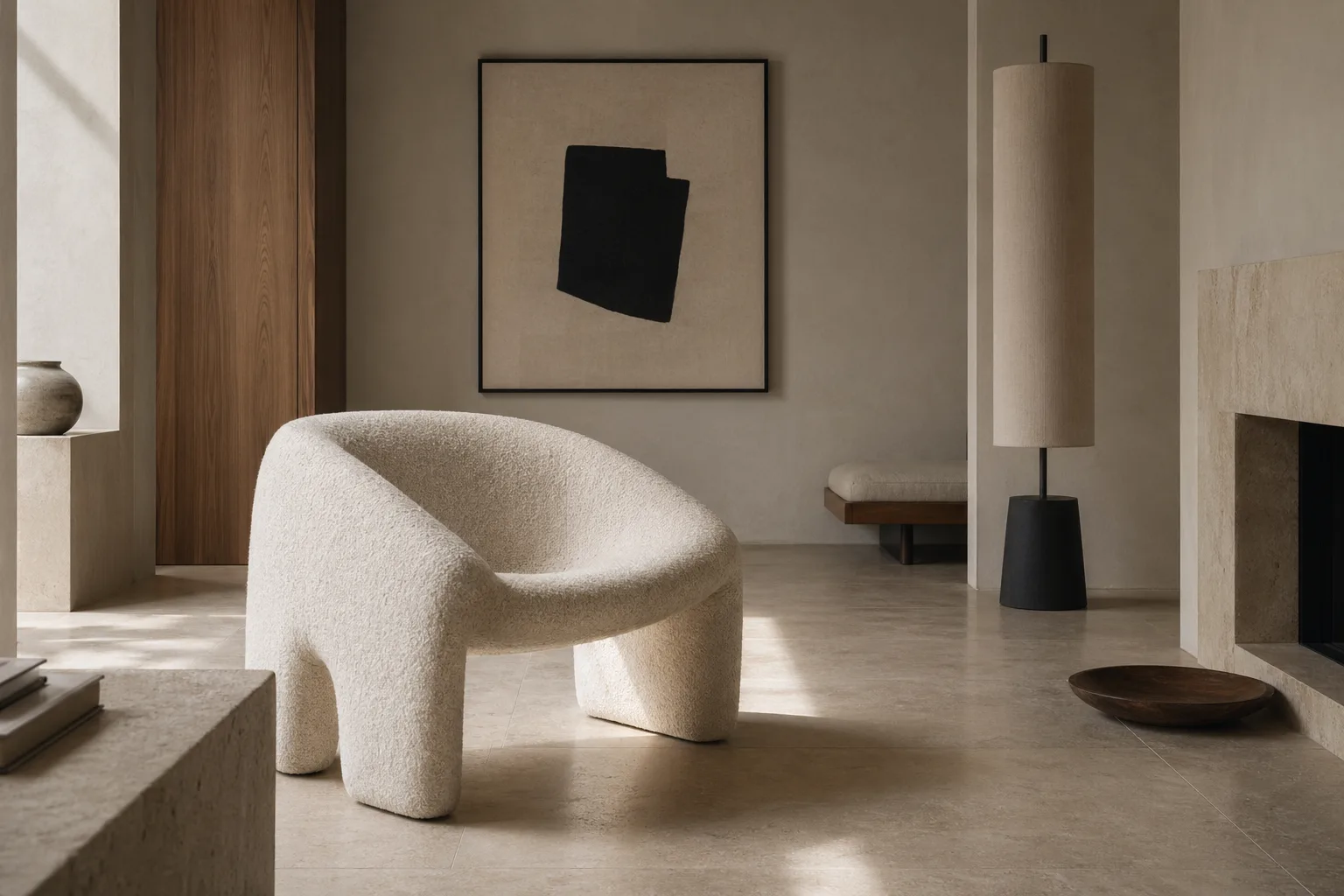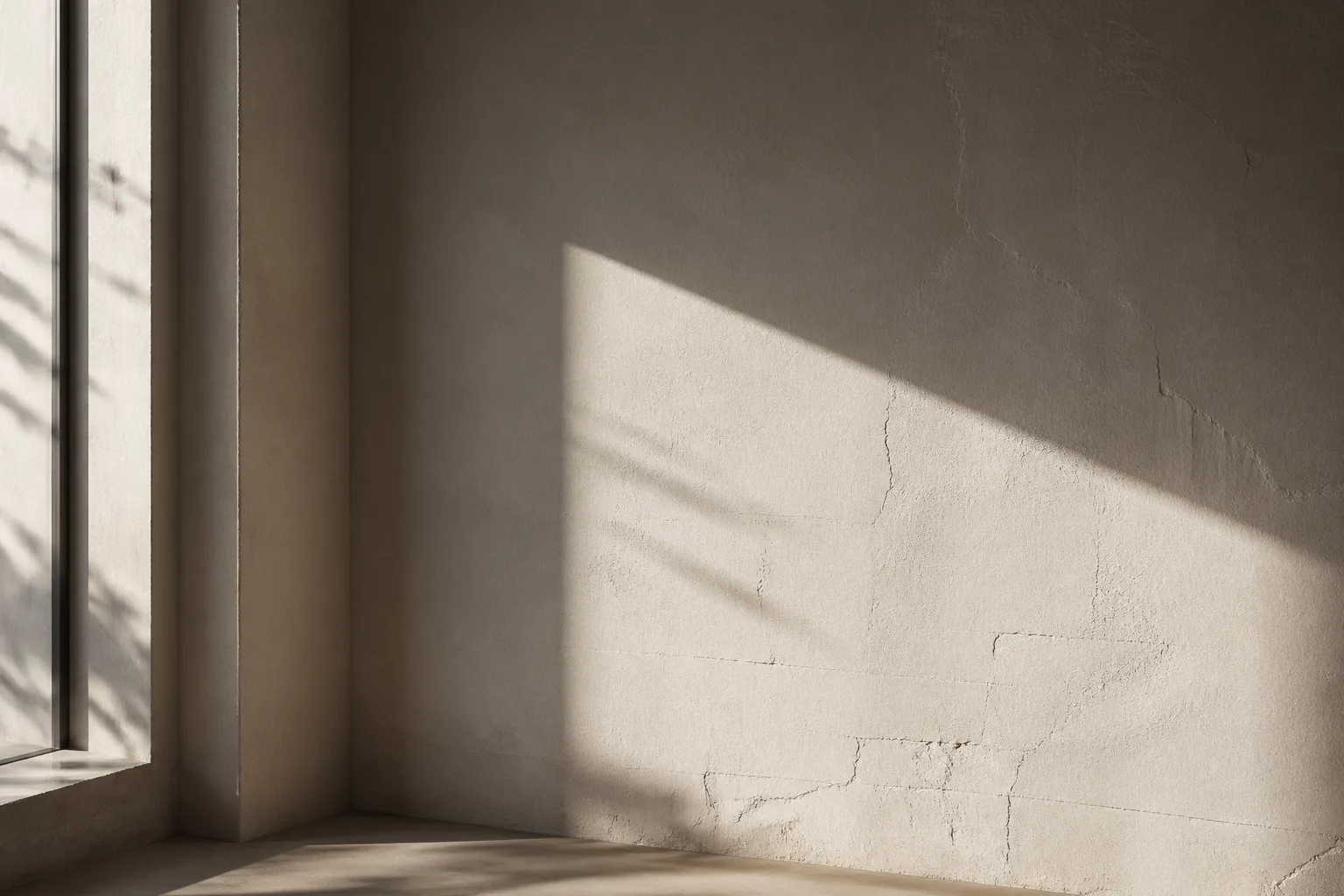
Many surfaces look flawless until the sun moves sideways. Then the wall tells the truth. Raking light, whether from a low window or a narrow sconce, exaggerates every ridge, seam, and shallow depression. This is not merely a technical issue; it is a perceptual one. Light determines which qualities become visible and which remain politely hidden.
Reading Material, Light, and Perception Together
Designers who understand light rarely judge a finish only under diffuse illumination. A wall that seems calm at noon may look nervous at sunset. That is why the conversation around smooth versus textured walls is never just about taste. It is also about how different materials receive and edit shadow over time.
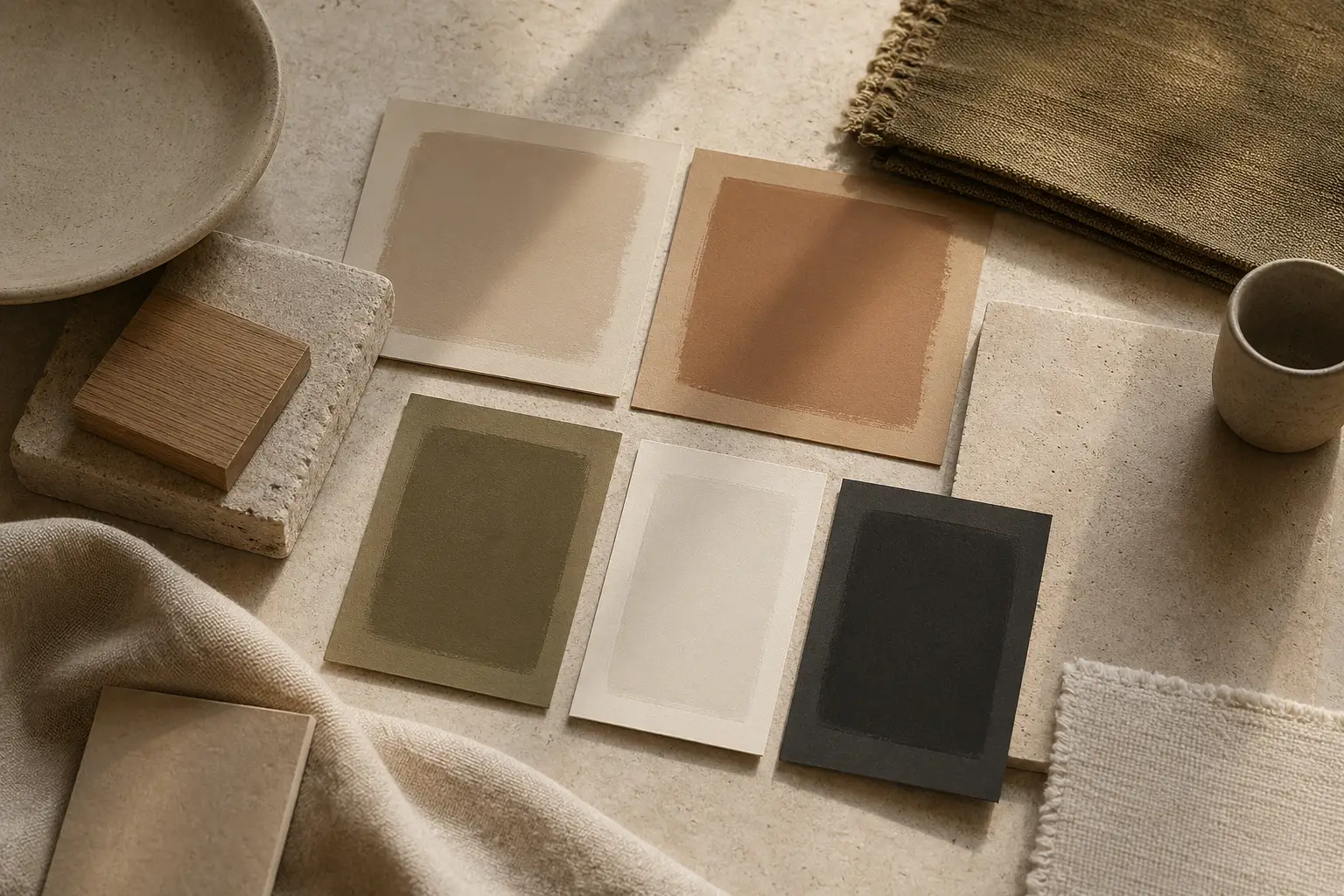
Reflective finishes intensify the problem because they sharpen contrast. Matte mineral paint tends to scatter light and soften small irregularities, while satin or gloss can make minor disruptions feel surprisingly loud. The same logic appears in typography: as noted in our article on type and emotion, higher contrast creates greater drama, but it also leaves less room for error.
This does not mean designers should pursue sterile perfection. Some of the most memorable interiors rely on deliberate variation, especially when walls are meant to feel tactile rather than polished. The key is intention. A handmade plaster surface can welcome oblique light because its movement is coherent. Random patches, abrupt repairs, or mismatched sheen are different; they interrupt the visual rhythm instead of enriching it.
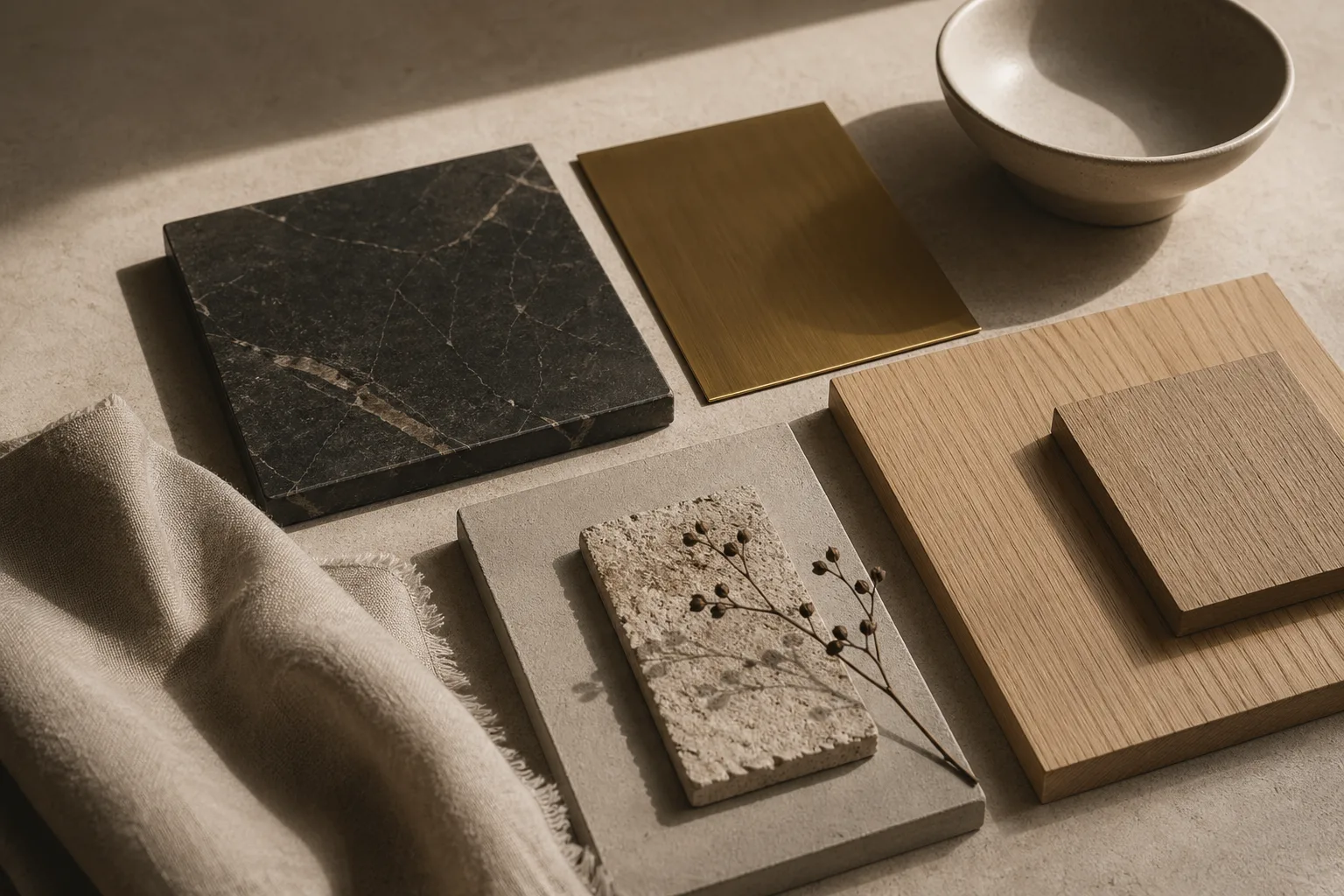
Ultimately, light is the editor of surfaces. It decides whether a room feels composed, honest, and serene. Studying walls at several times of day, and in relation to the materials discussed in visual weight and material perception, remains one of the simplest ways to predict how a space will actually be experienced.
Where to Go Next
For a broader editorial map of the site, visit the about page, browse the latest writing on the homepage, or continue with linked essays on typography, color psychology, and cross-disciplinary design continuity.