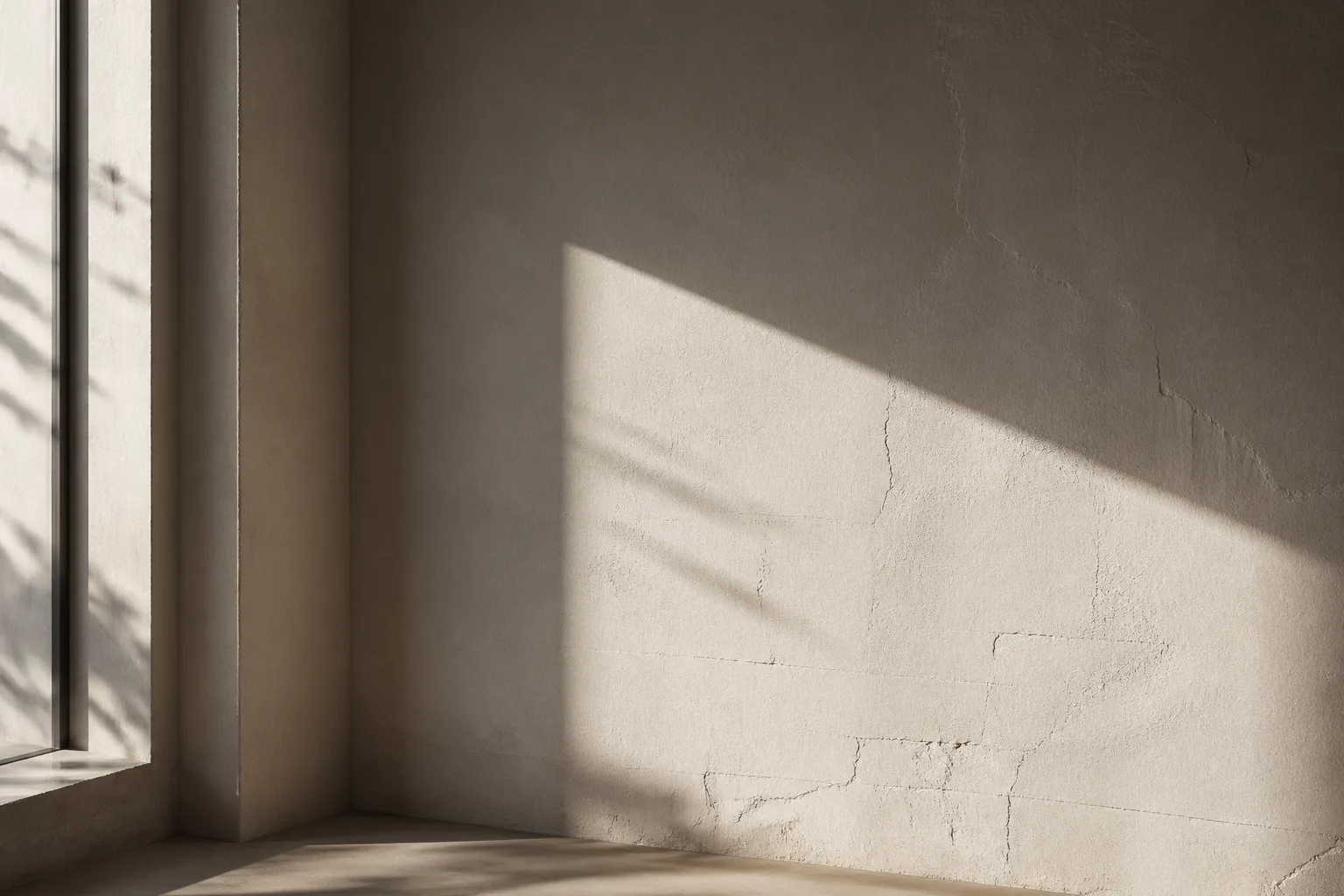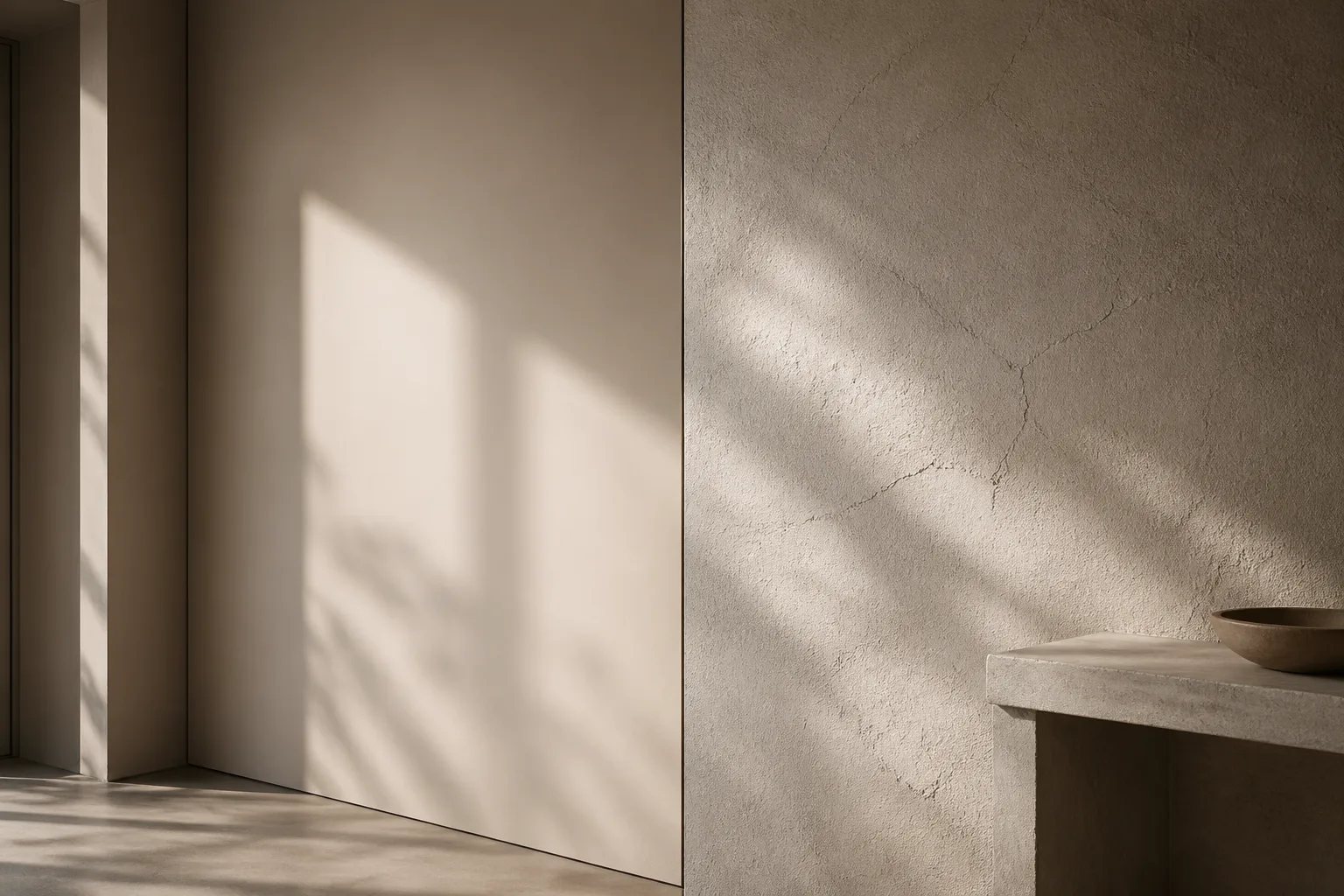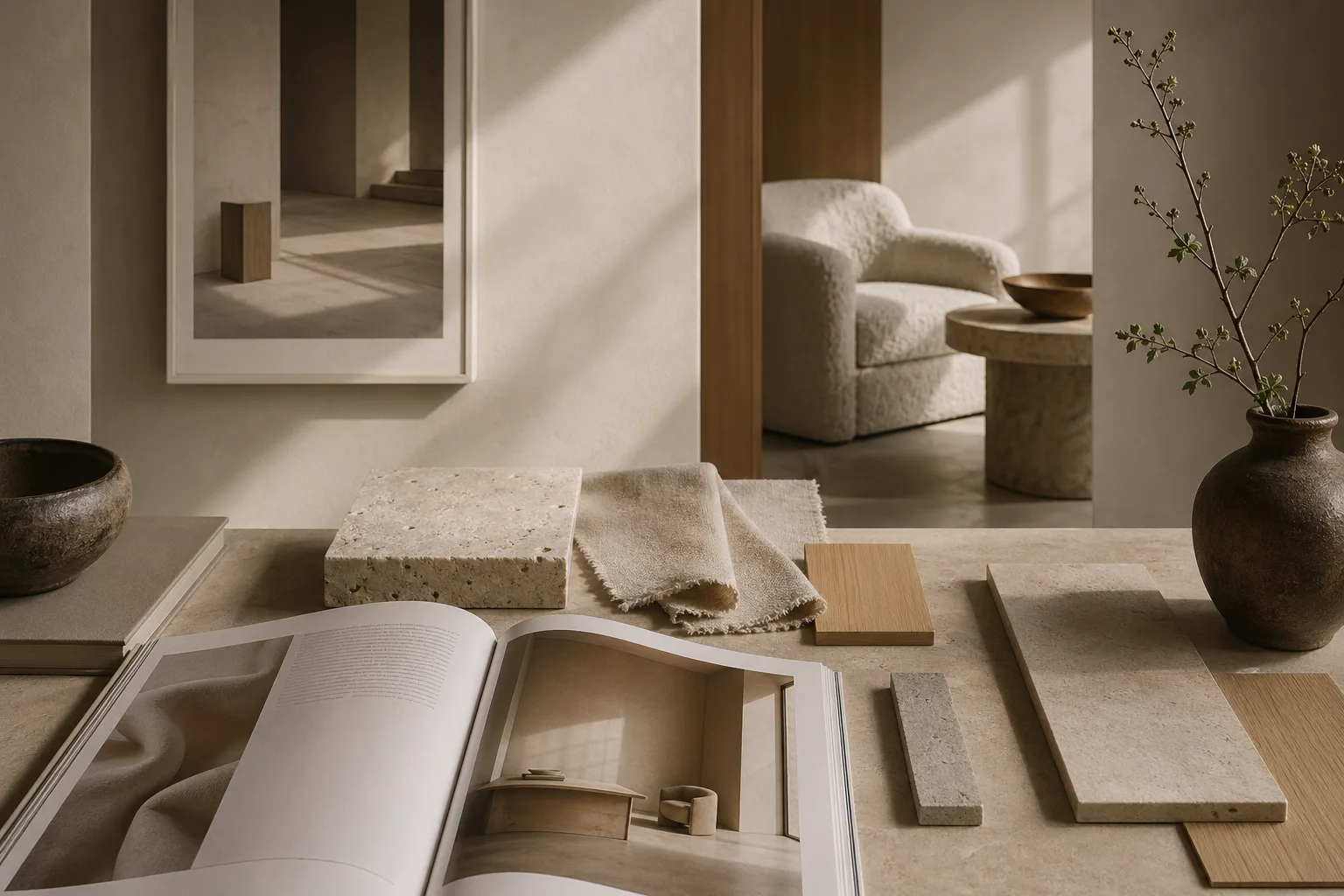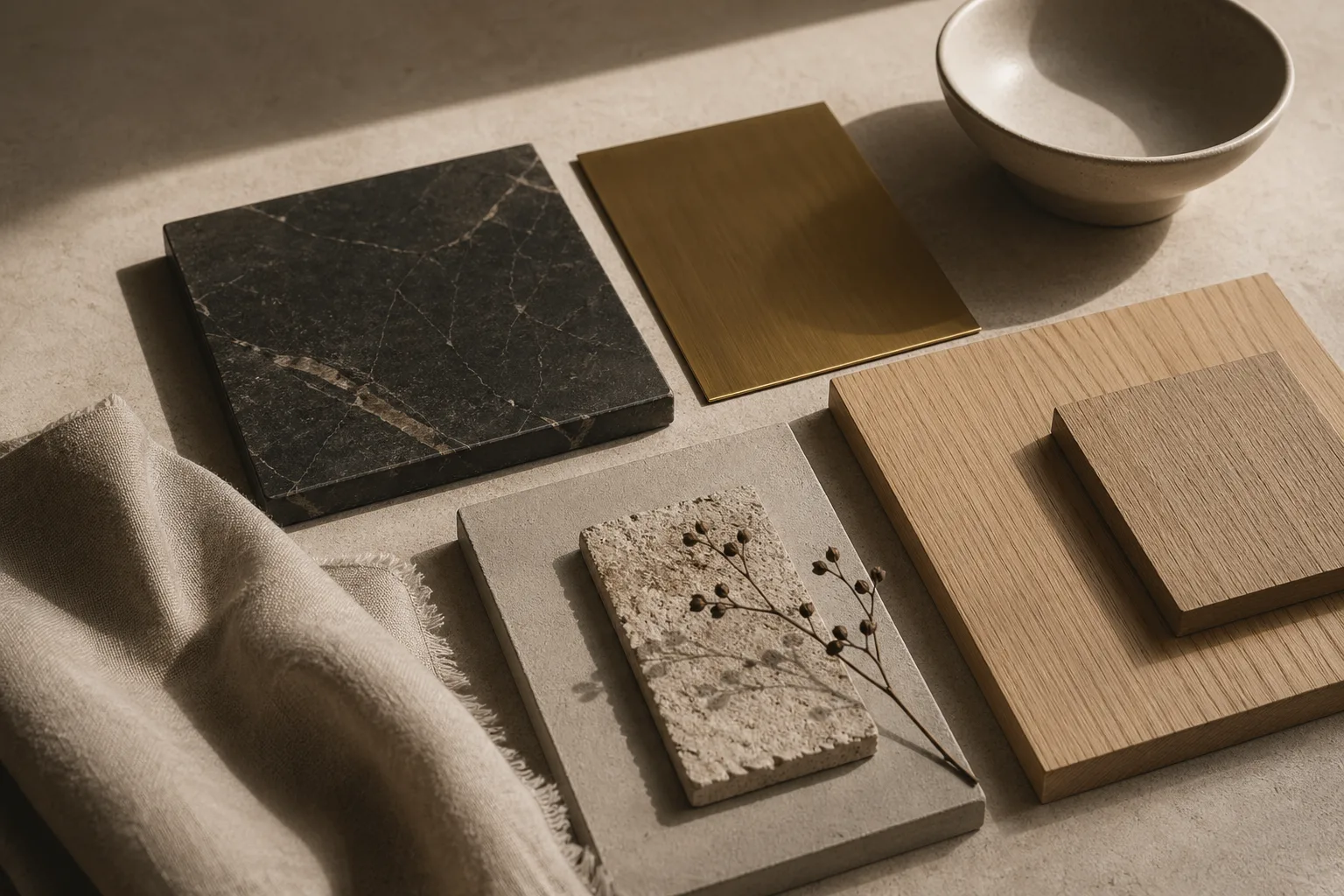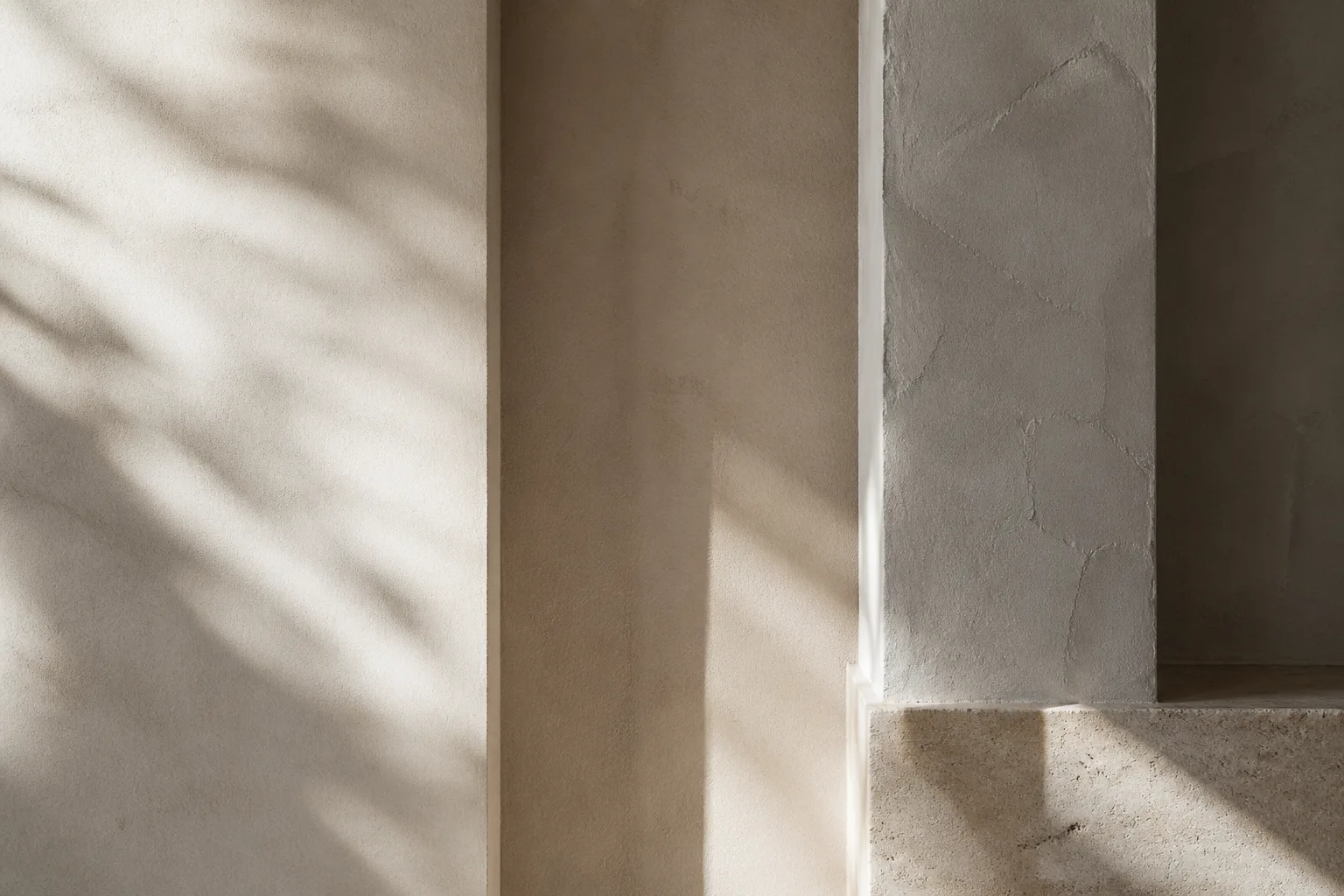
Walls are usually treated as background, but perception says otherwise. Because they occupy such a large portion of the visual field, walls quietly set the temperature of a room. A perfectly flat painted surface can feel precise and urban; a gently mottled plaster wall can feel slow, handmade, and forgiving. Texture changes not just appearance, but the emotional speed at which a space is read.
Reading Material, Light, and Perception Together
One reason texture matters is that the eye uses tiny shifts in light to estimate depth. When the wall catches daylight unevenly, the room appears more layered and alive. That is different from visual noise. As explored in light and surface flaws, the goal is not random imperfection but controlled variation that responds beautifully to illumination.
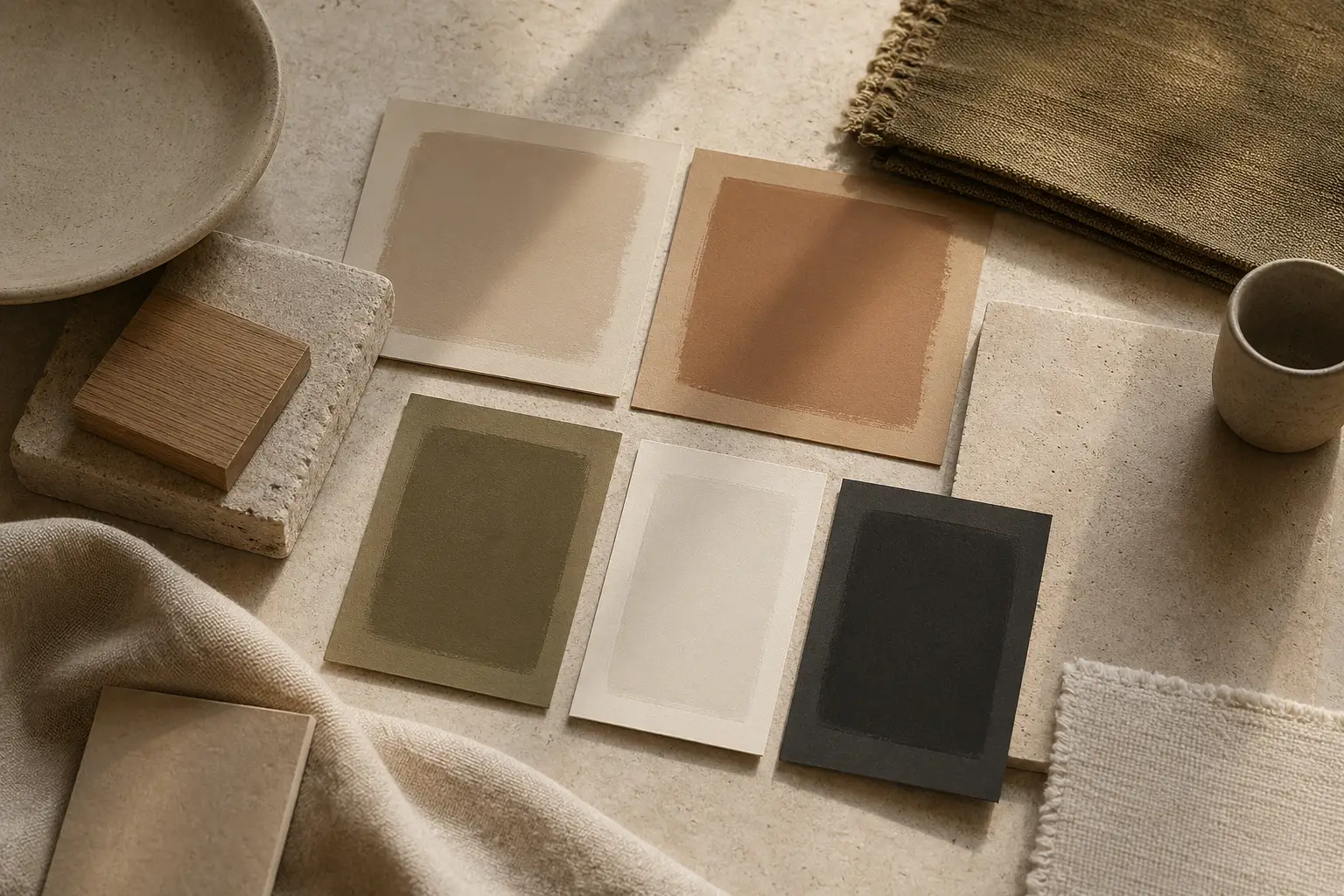
Texture also changes scale perception. A polished wall can make a compact space feel crisp and efficient, while a chalky, absorbent finish can enlarge the emotional presence of the room by giving the eye more to savor. Designers often pair these choices with the tonal strategies described in color psychology in rooms, using quiet surface movement to keep muted palettes from feeling inert.
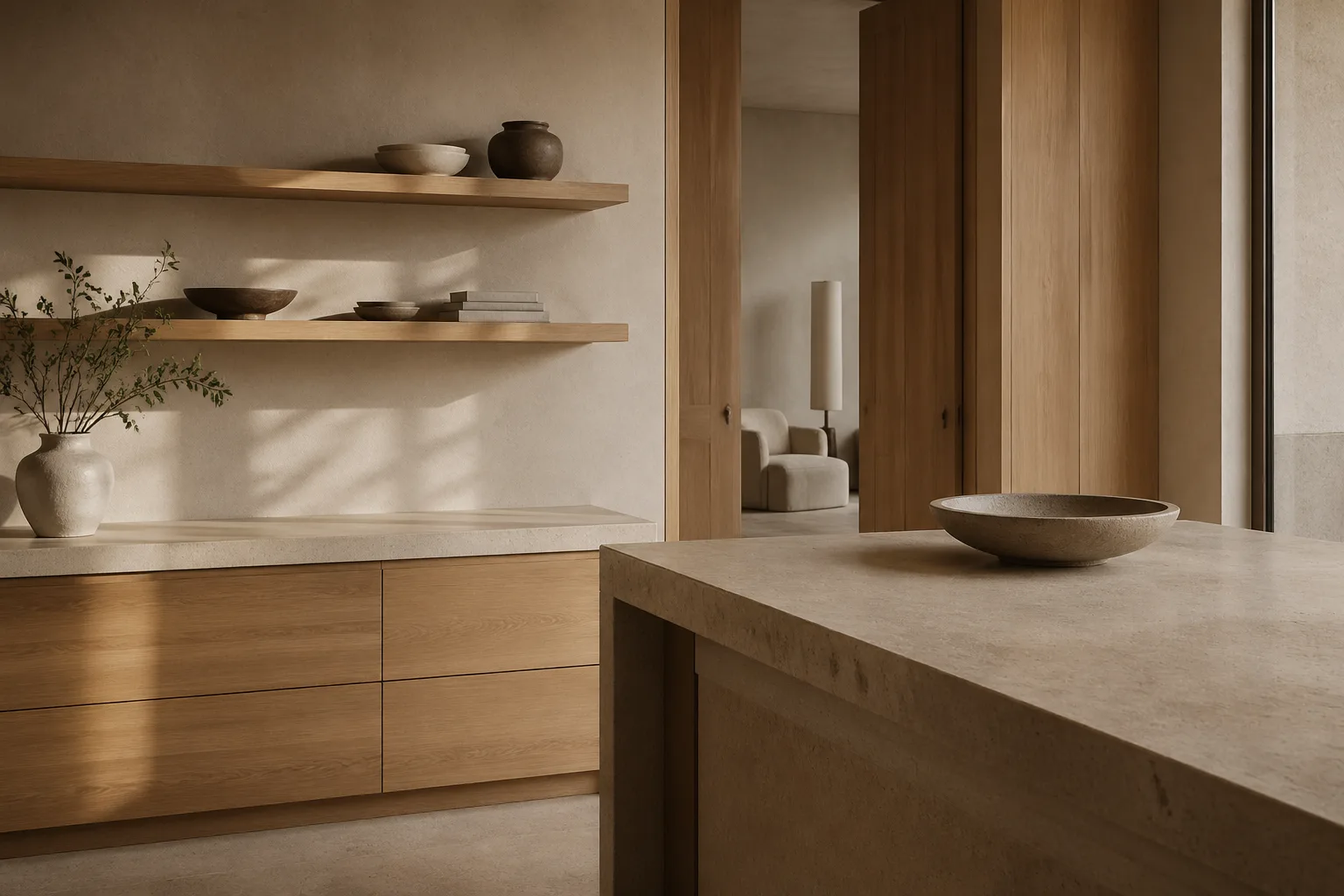
There is also a cultural reading to texture. Highly smooth walls often signal contemporary discipline, while handmade finishes suggest intimacy, craft, and domestic softness. Neither is automatically superior. The more important question is alignment. Does the surface reinforce the furniture, the lighting, and the typographic mood of the space, or does it argue with them? That dialogue is central to design continuity across disciplines.
When walls are chosen with care, they stop behaving like empty planes and begin acting like atmosphere. The room feels more coherent, the objects feel better placed, and even the silence of the space becomes more legible.
Where to Go Next
For a broader editorial map of the site, visit the about page, browse the latest writing on the homepage, or continue with linked essays on typography, color psychology, and cross-disciplinary design continuity.